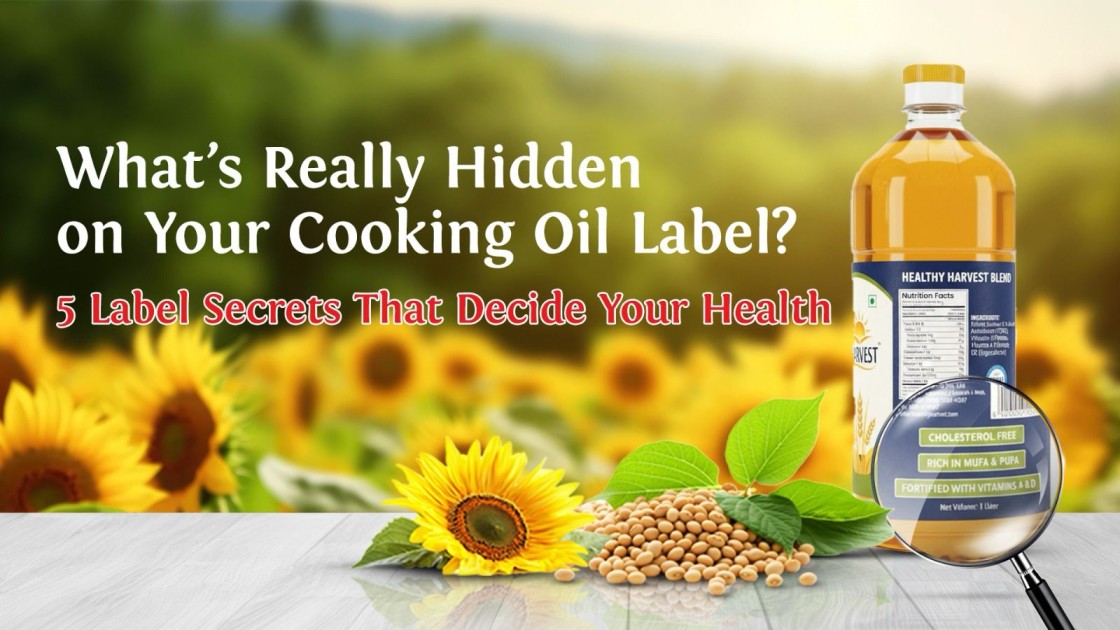
When you pick a bottle of oil from the shelf, do you read the label?
Labels tell the full story – from cholesterol and fat content to vitamins and shelf life. Learning to read them correctly helps you make healthier choices without giving up on taste or tradition.
Why Oil Labels Matter
Not all cooking oils are the same. Some are light and rich in good fats, while others are better suited for occasional use. Reading the label ensures you:
- – Choose the right oil for daily cooking
- – Balance your fat intake
- – Stay informed about FSSAI standards
Key Things to Check on an Oil Label
1. Cholesterol
– All plant-based oils are naturally cholesterol-free.
– Animal fats like ghee and butter contain cholesterol, but can be enjoyed in moderation.
2. Saturated Fat (per 100 ml)
– Check the saturated fat content – some oils are naturally lower than others. Balance your daily fat intake by mixing oils and limiting high saturated fat sources.
– Traditional fats like ghee and coconut oil are higher in saturated fat – so enjoy them in small amounts.
3. MUFA & PUFA
– These are the good fats & part of a balanced diet and healthy lifestyle
– A balanced oil blend provides both in the right ratio.
4. Fortification
– Look for oils fortified with Vitamin A and D, as per FSSAI norms.
5. Best Before & Storage
– Check expiry date and store in a cool, dry place to maintain quality.
Why Smart Label Reading Helps
- – Helps you choose heart-friendly oils for daily use
- – Let’s you balance traditional fats with modern blends
- – Prevents overuse of highly saturated fatty oils
Tip of the Week:
Flip the bottle, read the label – it helps you make smarter choices.
Coming Up Next Week:
We will discuss Heart-Friendly Oils: What Indian Doctors & Nutritionists Recommend
Till then, eat smart, feel light.
Video Link: https://youtu.be/yXj9OI0ales
Disclaimer: This article is for informational purposes only and is not a substitute for professional medical advice. Always consult a healthcare professional or a registered dietitian before making significant changes to your diet or health regimen. The products mentioned are part of a balanced diet and a healthy lifestyle.