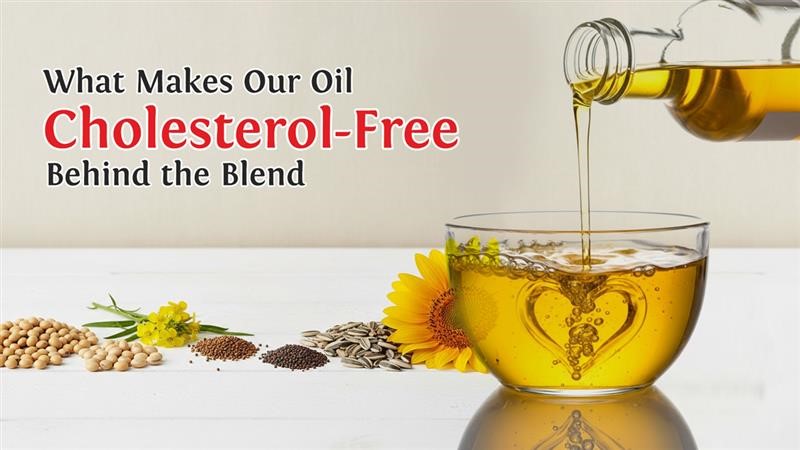
The Truth About Cooking Oil Most People Get Wrong.
The moment we hear the word fat, we instinctively think unhealthy. For years, fats have been blamed for heart problems, weight gain, and lifestyle diseases. But the truth is far more nuanced.
Not all fats are bad.
In fact, some fats are essential for your body – especially for your heart. The real question isn’t Should I eat fat?It’s Which fats am I using every day in my cooking?
Two types of fats quietly play a powerful role in heart health – MUFA and PUFA. Most Indian kitchens use oils without fully understanding this balance, and that’s where small, everyday mistakes can begin.
Let’s break it down – simply, safely, and practically.
What Are MUFA and PUFA?
MUFA: Monounsaturated Fatty Acids, MUFA are known to support heart-friendly dietary patterns when consumed in moderation.
They are commonly found in oils such as:
- – Mustard oil
- – Groundnut (peanut) oil
- – Rice bran oil
- – Olive oil
MUFA are valued because they:
- – Support balanced cholesterol levels
- – Help maintain overall cardiovascular wellness
They are suitable for daily cooking when used sensibly
PUFA: Polyunsaturated Fatty Acids, PUFA include essential fatty acids like omega-3 and omega-6, which the body cannot produce on its own.
Common sources include:
- – Sunflower oil
- – Soybean oil
- – Corn oil
- – Flaxseed oil
PUFA play an important role in:
- – Supporting normal body functions
- – Maintaining cell health
- – Complementing a balanced diet
When consumed in the right proportion, both MUFA and PUFA support heart-healthy eating habits.
Where Do MUFA & PUFA Appear in Everyday Cooking Oils?
Most cooking oils are not made of just one type of fat.
They usually contain a combination of:
- – MUFA
- – PUFA
- – Saturated fats
This is why nutrition experts often recommend oil rotation or oil blending.
Why Blended Oils Make Sense
Blended oils combine different oils to:
- – Balance fatty acid composition
- – Improve cooking stability
- – Suit every Indian cooking style
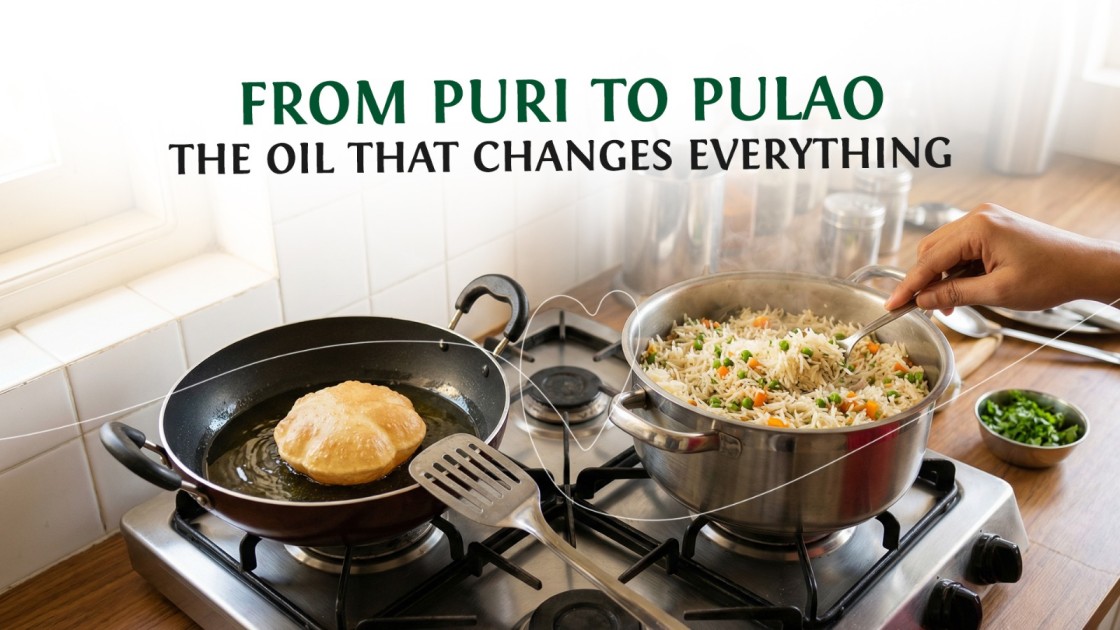
Oil offers this balanced approach, making it a practical option for daily use – from tadka to sabzi to light frying.
How MUFA & PUFA Support a Heart-Aware Lifestyle
When used in moderation and as part of a balanced diet, MUFA and PUFA can:
- – Support healthy cholesterol balance
- – Help maintain smoother blood circulation
- – Assist in reducing dietary imbalance
- – Fit well into heart-aware cooking habits
- – The key is not excess – it’s balance.
Using the right oil does not mean changing your food habits overnight. It simply means making a smarter, informed choice for everyday cooking.
What About Traditional Fats Like Ghee & Butter?
Indian kitchens are deeply rooted in tradition – and rightly so.
Ghee, butter, coconut oil, and other traditional fats:
- – Add flavour and aroma
- – Are culturally significant
- – Have their own place in Indian cooking
The Smart Approach
Instead of removing them completely:
- – Use them occasionally
- – Use them in small quantities
- – Combine them with oils rich in MUFA & PUFA
This way, you respect tradition without compromising balance.
Practical Tips to Get the Right Fat Balance
Here’s how you can apply MUFA-PUFA awareness without stress:
- – Rotate between oils rich in MUFA and PUFA
- – Use blended oils for daily convenience
- – Avoid frequent deep frying
- – Control portion size, oil quantity matters
If desired, add a small amount of ghee for flavour, supported by a light plant-based oil
Healthy cooking is not about fear – it’s about informed choices.
Tip of the Week
Good fats, when used wisely and in moderation, support the heart – not harm it.
Video: https://youtu.be/-u5uBBuZ96w
Coming Up Next Week
In Week 20, we’ll explore: How cooking oils impact immunity, especially during seasonal changes and festive eating.
Disclaimer: This blog is for general awareness purposes only and is not a substitute for medical advice. For health or diet-related decisions, please consult a qualified doctor or nutritionist. All claims and nutritional references are in accordance with the Food Safety and Standards (Advertising and Claims) Regulations, 2018.
Cooking oils should always be used in moderation as part of a balanced diet and healthy lifestyle. All plant-based oils are naturally cholesterol-free.