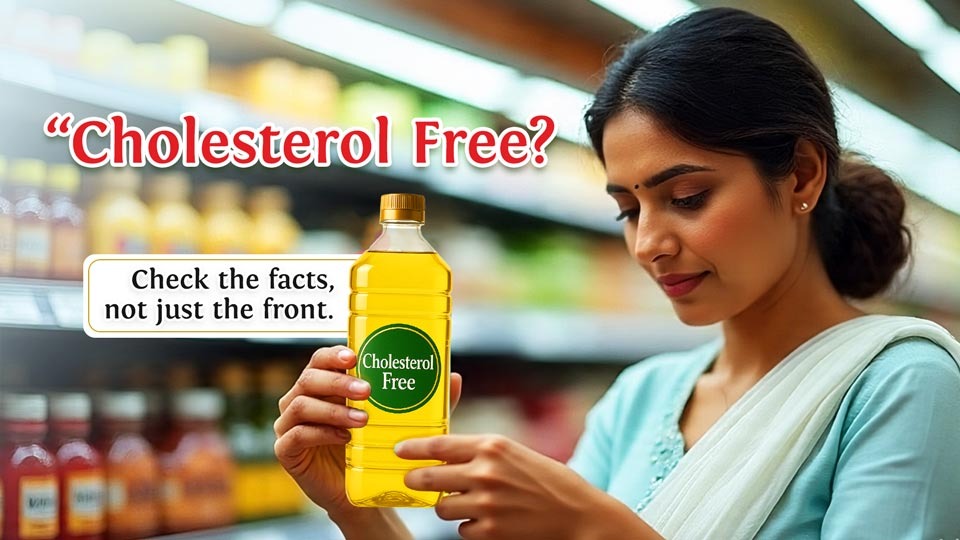
Many oils in the market are sold with labels like “Cholesterol-Free” or even promoted as “better for the heart.” But how can you know if those claims are actually valid?
This week, we’re helping you decode oil labels with confidence – so you can choose oils that truly qualify under FSSAI’s rules and support wise cooking choices.
What is Cholesterol?
Cholesterol is a fat-like substance found in animal-based foods like ghee, butter, meat, and eggs.
Plant-based oils such as mustard, soybean, sunflower, and rice bran are naturally cholesterol-free.
But here’s the key: the saturated fat content still matters.
Step 1: Read the Nutrition Label
Always turn the bottle and check the nutrition table:
- Cholesterol: Should be “0 mg” or “Not detected”
- Saturated Fat: To qualify as “cholesterol-free,” it must be less than 1.5 g per 100ml (as per FSSAI)
Even if an oil has zero cholesterol, a high saturated fat level can still influence your cholesterol balance.
Step 2: Check the Ingredients
A good cooking oil should have only one ingredient:
- “Refined Soybean Oil”
- “Kachi Ghani Mustard Oil”
- “Refined Sunflower Oil”
Avoid oils with hydrogenated fats or added animal fats, as they are not recommended for heart health.
Step 3: Don’t Get Misled by Front Labels
Front labels often highlight flashy claims but don’t always tell the whole story.
Watch out for:
- “Light oil” (often refers to colour, not health)
- “Heart-related” claims without regulatory backing
- “With Omega-3” (always check the actual amount)
The real facts are always in the nutrition table.
Oils That Usually Meet FSSAI’s Cholesterol-Free Criteria
- Mustard Oil
- Sunflower Oil
- Soybean Oil
- Rice Bran Oil
Note: Coconut oil and palm oil are naturally cholesterol-free but high in saturated fat. Best consumed in moderation.
Quick Checklist
- Cholesterol = 0 mg
- Saturated fat <1.5 g / 100 ml
- Single-ingredient oils preferred
- Don’t rely only on front-label claims
Tip of the week:
“Smart cooking starts at the store. Pick oils with clean labels, low saturated fat, and no confusion.”
Coming Up Next Week
Why Your Oil’s Saturated Fat Content Matters More Than You Think