The Cholesterol-Free Trap: Are You Secretly Gaining Fat Without Knowing It?
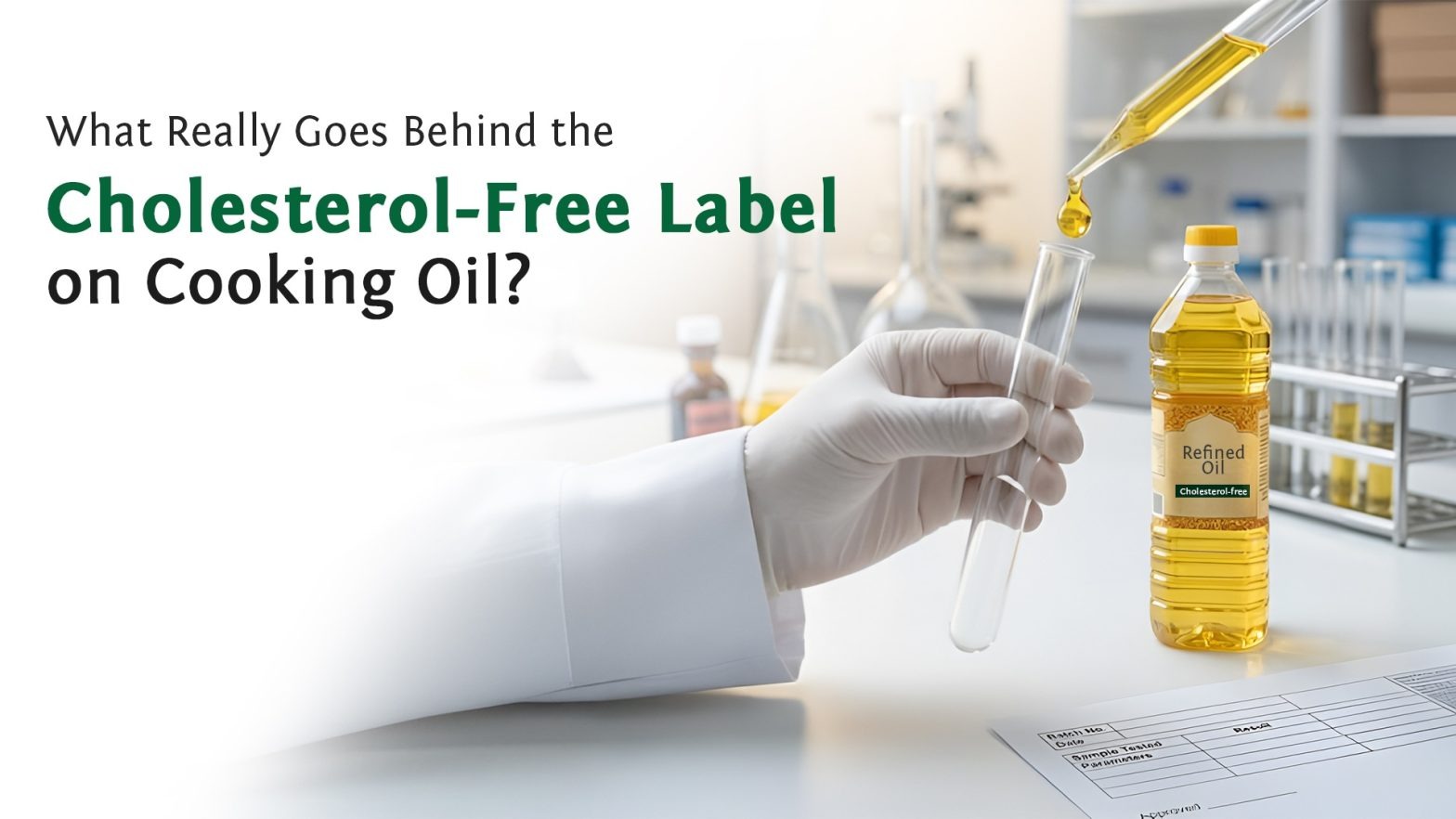
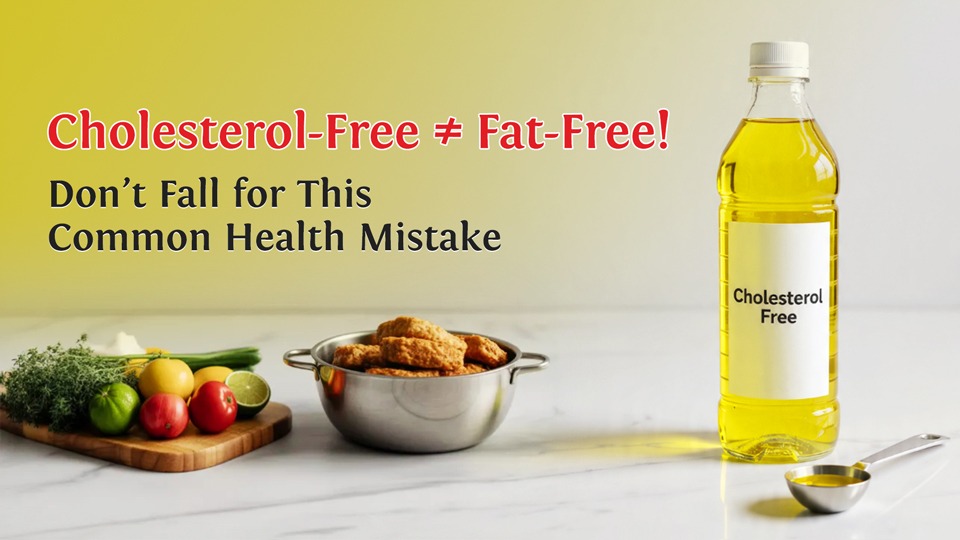
Walk into any supermarket and you’ll see oil bottles proudly labelled Cholesterol-Free.
Sounds healthy, right? Many people assume it means fat-free – but that’s one of the biggest food myths out there.
This week, let’s clear the confusion and understand what these labels really mean for your heart and health.
Cholesterol-Free Fat-Free
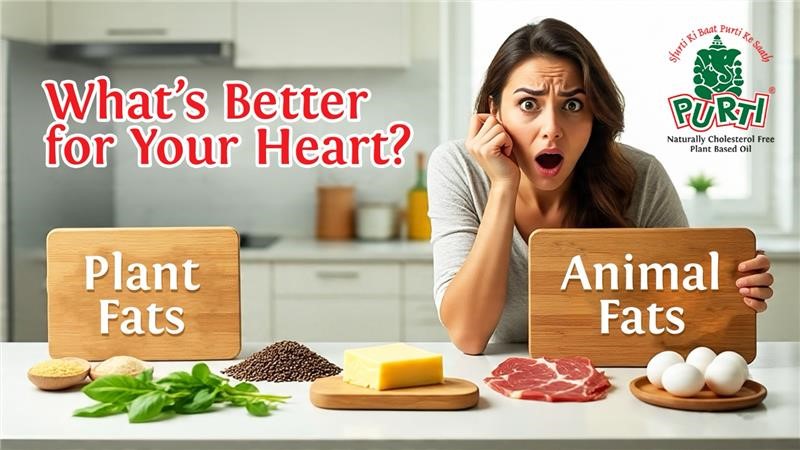
Cholesterol is a type of fat found only in animal-based foods like meat, ghee, butter, and full-fat dairy.
In contrast, vegetable oils – such as mustard, sunflower, soybean, and rice bran – are naturally cholesterol-free because they come from plants.
But here’s the catch:
Oils are 100% fat, even if they don’t contain cholesterol.
So, cholesterol-free doesn’t mean fat-free or calorie-free.
Why This Difference Matters
If you pour too much oil, thinking it cholesterol-free, so it’s healthy, you might still:
- Consume excess calories
- Increase your overall fat intake
- Risk weight gain over time
- Nutrition experts recommend:
- Use around 4-5 teaspoons (20-25 g) per person per day, even for heart-friendly oils.
What About Traditional Fats?
Not all fats are bad – it’s about how much and what kind you use.
Ghee & Butter: Contain saturated fat and cholesterol, since they’re animal-based. They add great flavour but should be used in moderation.
Coconut Oil: Stable for cooking and adds aroma, but also high in saturated fat – use sparingly.
The smart approach?
Balance traditional fats with cholesterol-free vegetable oils for everyday cooking.
How to Make Smarter Choices
Here’s how to use oils wisely without giving up taste or health:
- Read nutrition labels – check cholesterol and saturated fat levels.
- Measure your oil – use spoons instead of free pouring.
- Rotate your oils – mix MUFA-rich (like olive or groundnut oil) and PUFA-rich (like sunflower or soybean oil) for better balance.
- Cook smart – blend tradition with science for truly heart-friendly meals.
Tip of the Week
Cholesterol-free doesn’t mean free to pour. Fat is still fat – so measure wisely.
Coming Up Next Week
Your Oil vs. Your Lifestyle How They’re Connected.
Stay tuned to learn how your daily cooking choices reflect your heart health.
Don’t Miss This Video: https://youtu.be/J8wkNatr0KA